Mert Coşkuner
MSc student in Computer Science & Engineering, Sabancı University
I work on trustworthy and efficient machine learning: how learning systems behave under attack and under constraints. My recent projects cover Byzantine-robust and differentially private federated learning, backdoor attacks on graph neural networks, adversarial robustness and knowledge distillation, and 4-bit quantization of multilingual language models.
I am currently a researcher at TÜBİTAK BİLGEM and a teaching assistant for Security, Privacy and Robustness in Machine Learning at Sabancı University.
Interests
- Federated learning under Byzantine attacks and differential privacy
- Backdoor and evasion attacks, and defenses, on vision and graph models
- Robustness of compressed models: distillation and low-bit quantization
- Multilingual and Turkish language models
- 2026 Aggressive, Imperceptible, or Both: Architecture-Aware Hybrid Byzantines in Federated Learning
Emre Özfatura, Kerem Özfatura, Baturalp Büyükateş, Mert Coşkuner, Alptekin Küpçü, Deniz Gündüz
IEEE European Symposium on Security and Privacy (EuroS&P 2026)
arXiv

Structure-aware FedALA
Personalised federated graph learning with topology-weighted aggregation, a proximal term and degree-calibrated differential privacy, benchmarked on seven graph datasets with 10 and 20 clients.
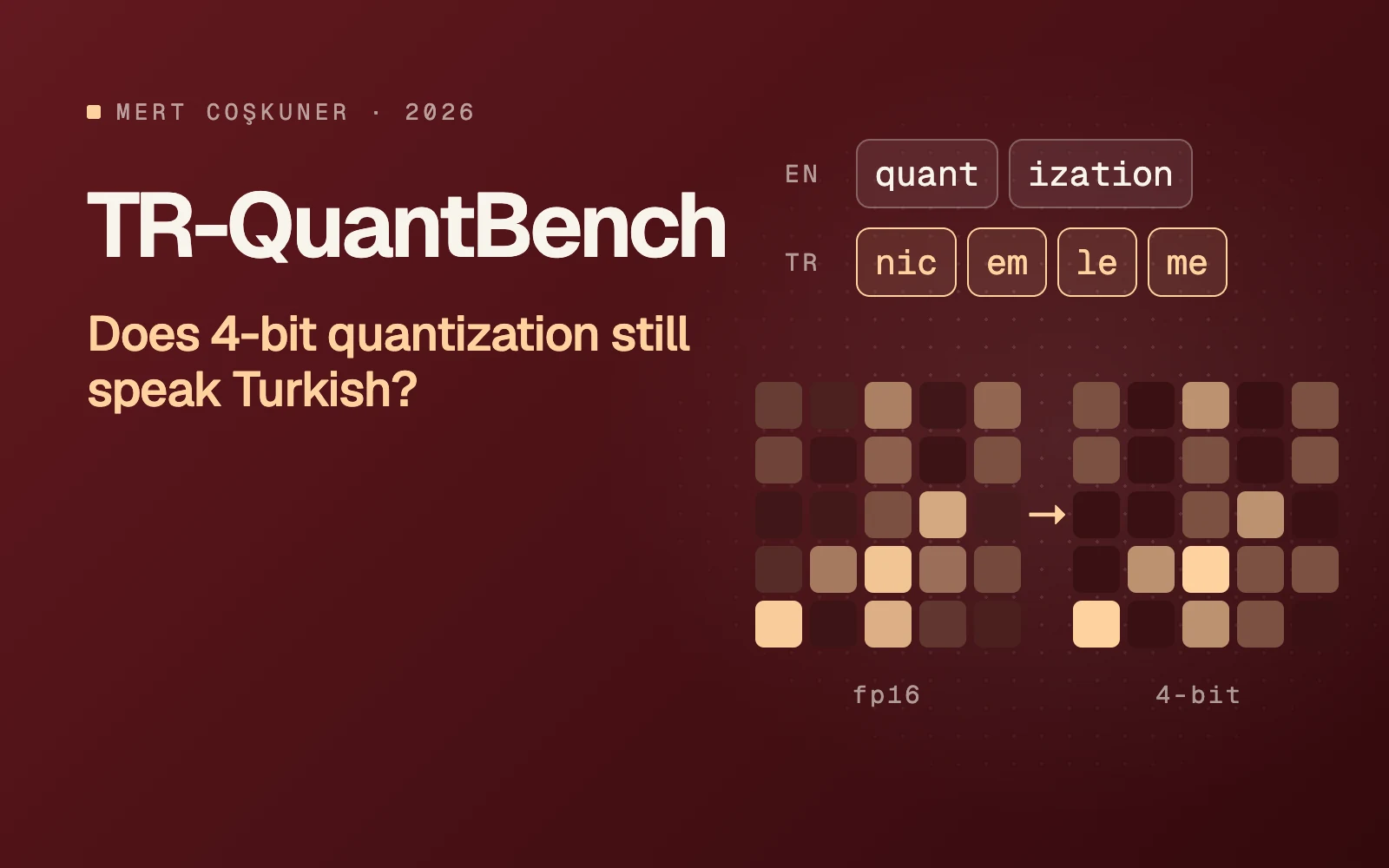
TR-QuantBench
How the language of the calibration data shapes 4-bit GPTQ and AWQ quantization of multilingual LLMs, with a Turkish focus and a tokenizer-density analysis.

Backdoors in graph neural networks
A PyTorch Geometric framework for graph, node and link tasks with Graph Trojaning Attack backdoors on graph classification, plus spectral, topological and feature analyses of poisoned graphs.
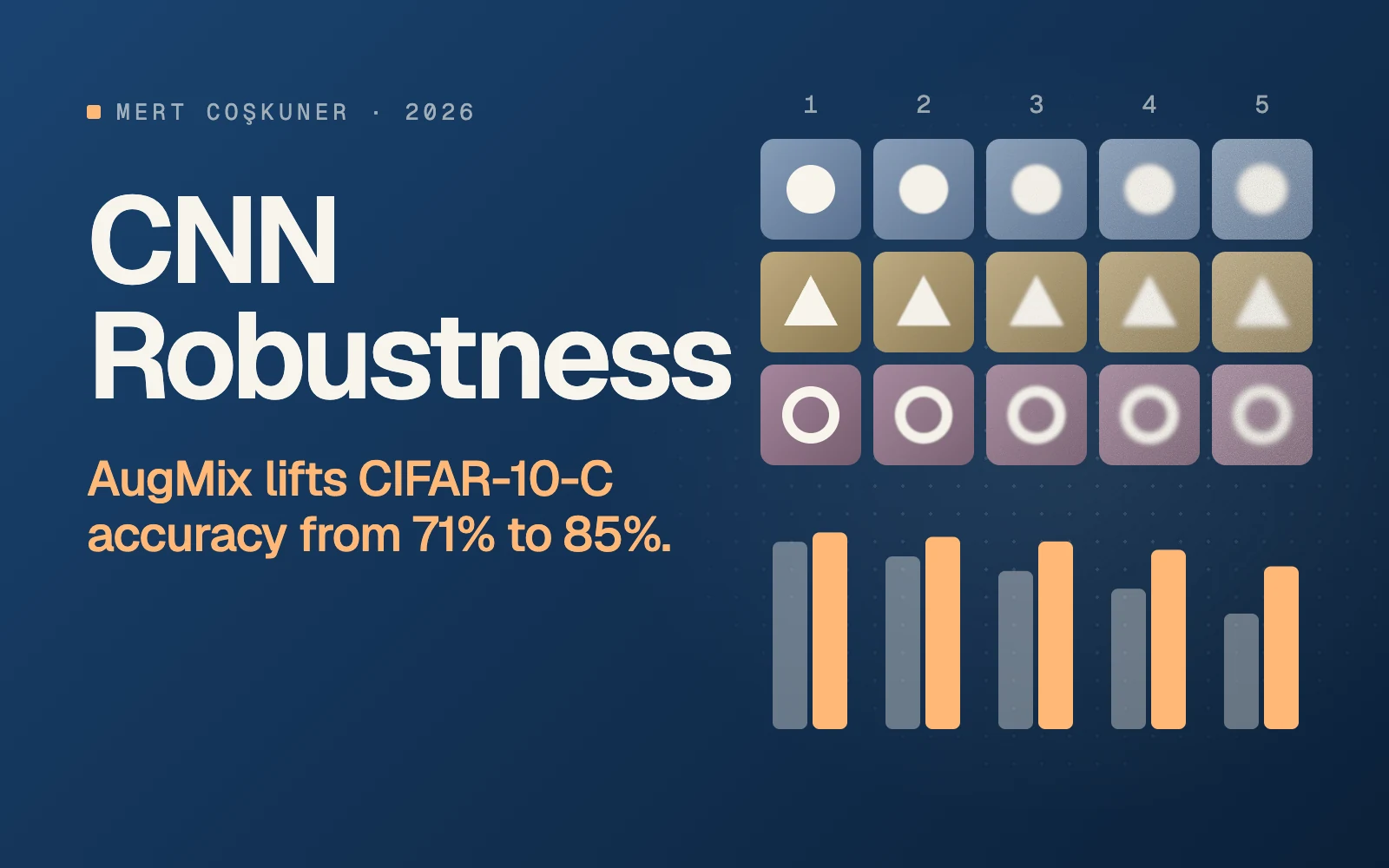
CNN robustness on CIFAR-10
Corruption and adversarial robustness of transfer-learned and distilled CNNs on CIFAR-10/-C: AugMix with JSD, PGD, Grad-CAM, and how a teacher's adversarial examples transfer to its students.
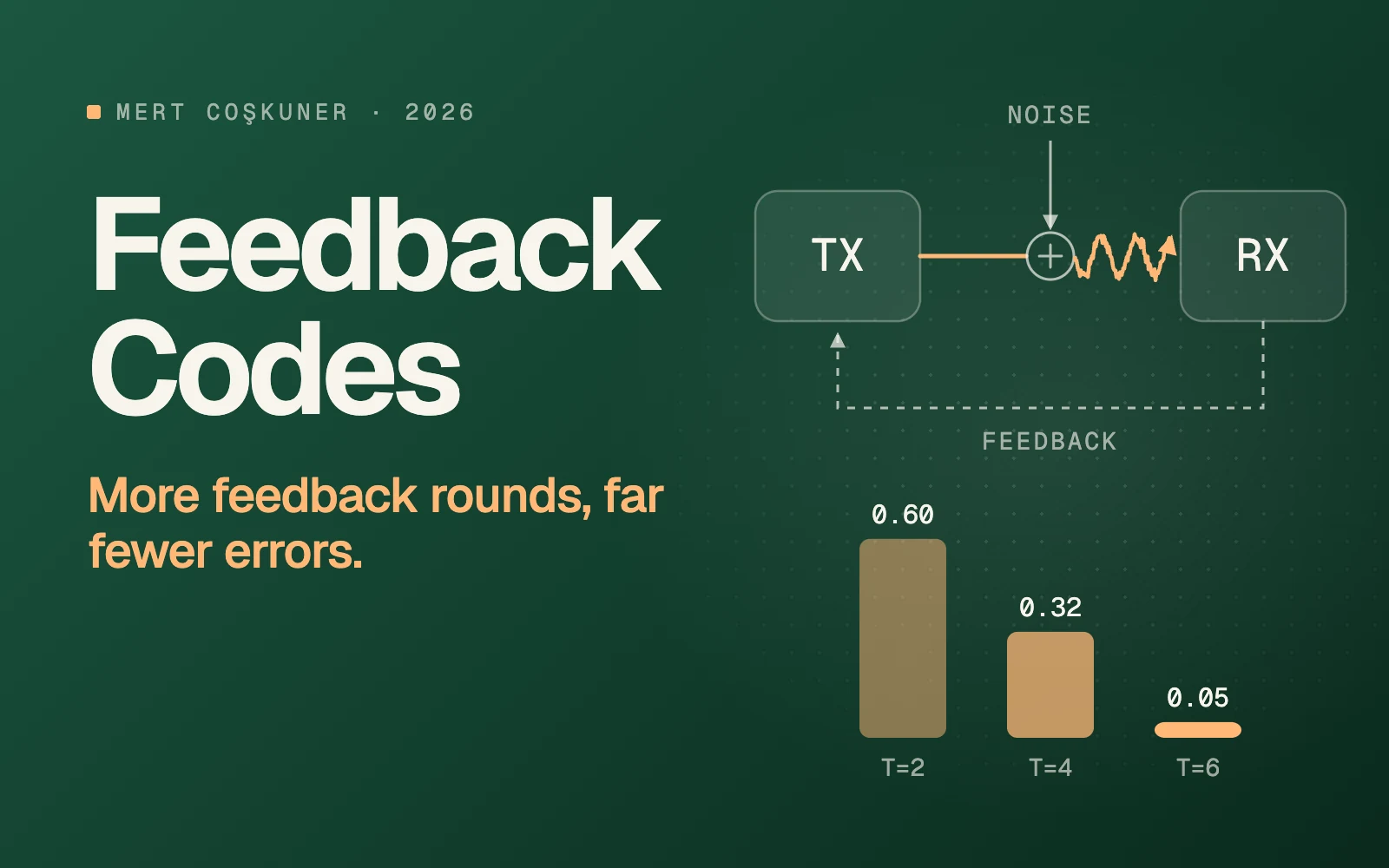
Transformer feedback channel coding
End-to-end learned channel codes for the AWGN channel with noiseless feedback: a transformer transmitter and receiver trained through the channel, with ablations over rounds, noise and capacity.

Aspect-based recommender
Product recommendation from Amazon reviews via instruction-tuned aspect-based sentiment analysis, LDA and BERTopic topics, and hierarchical meta-aspect clustering.
- Jan 2025 – now Researcher · TÜBİTAK BİLGEM, Informatics and Information Security Research Center
Research in big data, cloud computing and machine learning.
Kocaeli - Jul 2024 – Jan 2025 Research Intern · Ericsson Research Türkiye
Signal identification with gradient-boosted models and CNNs, CNN-based DDoS detection, and anomaly detection for federated-learning security.
Istanbul - Oct 2023 – Jan 2024 Undergraduate Research Assistant · PURE, Program for Undergraduate Research
Circuits and systems performance benchmarking with machine learning: NLP-based extraction of results from papers on CMOS, SiGe and GaN circuits, and a comparison of the three technologies.
Istanbul - Jan – Feb 2023 Software Engineering Intern · TÜBİTAK BİLGEM, Informatics and Information Security Research Center
Blockchain development for an NFT marketplace.
Kocaeli - Aug – Sep 2022 Software Engineering Intern · Intertech
A blockchain-based investment platform; Scrum Master of the intern team.
Istanbul
- Fall 2026–2027 Teaching Assistant · EE48012 Security, Privacy and Robustness in Machine Learning Sabancı University
- Spring 2025–2026 Teaching Assistant · CS412 Machine Learning Sabancı University
- Fall 2025–2026 Teaching Assistant · CS404 Artificial Intelligence Sabancı University
- Spring 2022–2023 Learning Assistant · CS201 Programming Fundamentals Sabancı University
- Spring 2021–2022 Learning Assistant · Calculus II Sabancı University
- 2025 – 2027 MSc, Computer Science & Engineering · Sabancı University Istanbul
- 2020 – 2025 BSc, Computer Science; minor in Business Analytics · Sabancı University
Graduated with distinction; on the Dean's list in every term.
Istanbul - 2015 – 2020 High school diploma, French Baccalauréat equivalent · Notre Dame de Sion French High School Istanbul